
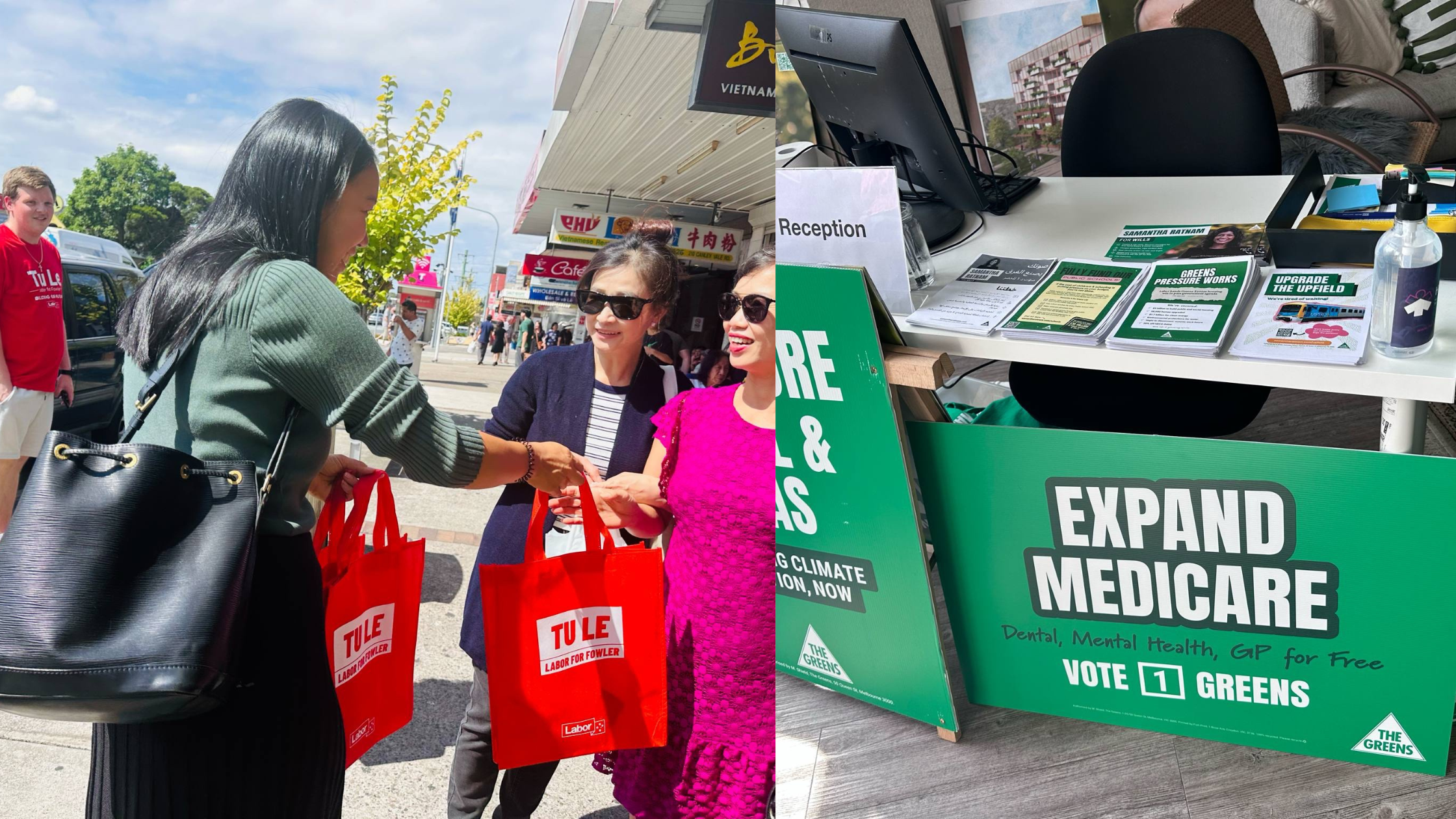
As we approach Election Day (for those who have been living under a rock and unaware, it is this Saturday, May 3), political parties, candidates and the media are preparing for their last minute stories and pitches to the voters of Australia.
Most voters would have already voted – whether it be by postal vote or at pre-polling places, and there will be a decision made as to whether the current Labor Government will prevail OR will Australia decide for a change and install a Liberal/Coalition led Government OR will Australia be thrown into a minority government with the major parties needing to negotiate with the minor parties and independents to form government.


Prior to Election Day, around 40% of Australian voters have already cast their ballot- either by postal votes or going to their local pre-polling centers.
After the 2022 election, Australia saw the most culturally diverse Parliament elected, with the number of Asian Australians elected for the first time. This was a moment to applaud and it is hoped that 2022 may be replicated with the addition of more Asian Australians.
There are a good number of Asian Australian women standing as candidates for the first time
It has been extremely refreshing to engage, reach out and talk to all the awesome Asian Australian women who have put up their hand and are standing up as candidates for the election.
Lawyer, working mum and proud Vietnamese Australian Tu Le, spoke about her motivations in representing the Labor Party for the seat of Fowler in Sydney’s south west. This seat historically and traditionally has been a safe Labor seat, but due to a major oversight, actually more of a blunder (parachuting candidates who have no connection to the electorate) by the Labor Party the seat was lost in the last election to Independent MP Dai Le.

However, things have gone back in its place and this time round it looks like Fowler will be a battle between the Le’s.
“I am someone who looks at the present and the future and not the past. I am a mother of two ( with a new born )and my two and a half year old son Boston. Both are at home with their dad at the moment. I am a local to this electorate and talking with residents, I resonate with their concerns – whether it be local or more national”, Le stated.
“I am standing up because as a working mum, I have a mortgage to pay and I rely on childcare subsidies, and I believe the current government plays an important part in ensuring that people have equal access ti opportunities and ensure that all people have all the services and resources to thrive”.
For Malaysian Australian candidate Hannah Thomas who is the Greens candidate for Grayndler – yes the Prime Minister’s electorate! politics runs in her blood. As a former international student and one who is renting in the electorate, Thomas understand the issues with rental prices and how important politics is to change the trajectory when it comes to policy change to help all Australians.

“I grew up in a very politically aware and progressive family in Malaysia where politics was heavily discussed around the family dinner table. My grandparents were also like this and my grand uncle was a progressive activist in India”.
“I am standing up because I love politics, but more importantly, I am a renter and I understand issues around the affordability crisis, those pushed out of both the housing and the rental market and those who are struggling – these are issues voters in Grayndler have been telling me. I believe the Greens is the party to pressure whoever becomes the government to change policies”, Thomas passionately expressed.
Asian Australian candidates being chosen to represent electorates where they have a chance of winning
There was a time not too long ago, where Asian Australians were asked to run for electorates where they had absolutely no chance in winning. Where this still prevails, there has been a change. This was quite evident during the last election where Asian Australians ran in seats which were considered marginal and won. Sally Sitou is one of those. Despite the fact that if she wins her seat in this election, she will be serving her second term as the Federal Member for Reid which spans from Sydney’s West to the boundaries of the Inner West of Sydney.

As a proud Labor member and a very hardworking Federal Member ( this is/was evident from taking a look at her social media accounts), if she manages to win Reid again, her future is on the up. In addition, Sally discussed the demographics of Reid – which has a large Asian Australian voter base.
“I see Reid as a real microcosm of Sydney. It has so many elements – it comprises of many multicultural and multi faith communities, with families in the electorate highly aspirational. They want their children to have the best education opportunities and they all hold values which I can resonate with coming from a Laotian Australian family”.
“I have been door knocking long before this election campaign period, and I do so because I want to understand the real insights of the challenges my community faces, give them a voice and ensure their concerns are my concerns”, Sally expressed.
In a neighboring electorate of Bennelong, the Liberals/Coalition have elected Chinese Australian Scott Yung to be their candidate. The electorate of Bennelong, like Reid is very aspirational and contains one of the largest Asian Australian voter base in NSW ( and possibly up in the ranks for this nationally). It also is an electorate with low rates of English proficiency with (25-26%) with a large majority speaking Mandarin and/or Cantonese. The electorate has changed hands a few times from Liberal to Labor, back to Liberal and then during the last election by a small margin back to Labor.

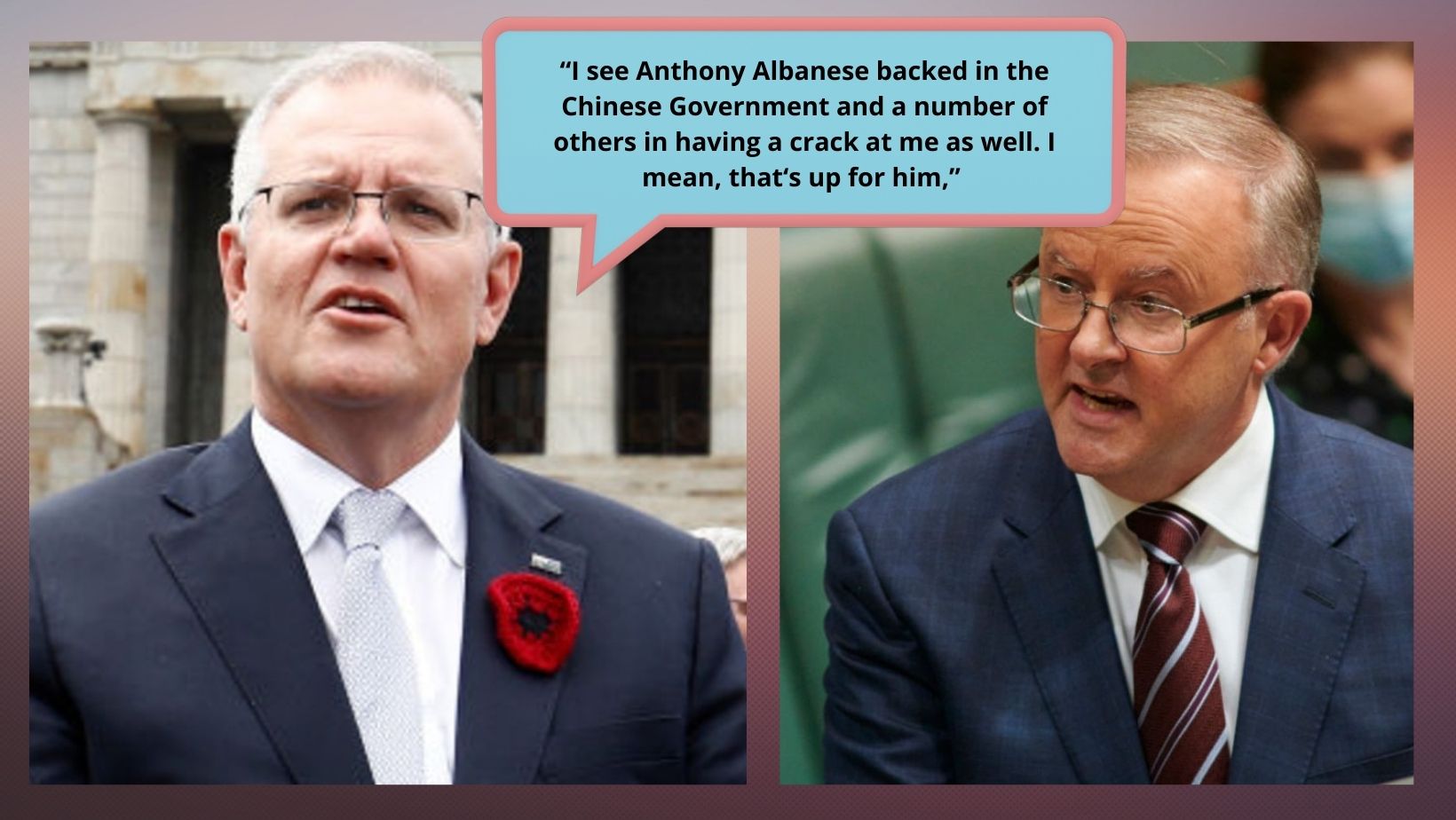
The Liberals/Coalition are eyeing to win back this seat and feel Scott is the person to accomplish this. Scott has recently been embroiled in a few controversies – all pointing to him having engagement with Chinese business/ Chinese government operatives. What is sad about this is that the element of racism cannot be denied with the association of Scott with CCP operatives – another example of the Sinophobia in Australia.
Scott is a businessman, owning an education company and in a recent video he spoke about how the relationship between Australia and China needs to be maintained as;
“It’s important for Australia, it’s important for Australian businesses.”
He also mentions that this geo-political issue is important during his conversations with voters in Bennelong.
“The community’s concerns will include increased racism, the effect on those who do business with China and what it means for people with family in China,” Scott stated.
Down in Victoria, the Greens are eyeing to win the electorate of Wills which is considered as a Labor electorate. Samantha Ratnam, who was formerly a MLC in Victoria is taking on this task.

Ratnam stated that before she got involved with politics, she was a social worker, working with migrants, asylum seekers and other disadvantaged communities. The idea of becoming a politician was never part of the plan, despite her deep interest and passion for politics.
“Firstly, I never thought I would be a politician or could be a politician. How could someone who looks like me be accepted and voted on by the people. I did decide to take the plunge because as a social worker I saw what services were lacking in migrant communities, and the only way to make the change is to be part of the process. I joined the Greens because their policies and principles matched up with what I believed in”.
“The Greens are a courageous party and extremely visionary and they are the party who speaks truth to the power. They made me realise that I do not need to be part of a major political party to enact change”, Ratnam explained.
On a different end of the spectrum (also in Melbourne) but in the suburbs is the electorate of Menzies. Menzies has a similar vibe and demographic to Sally Sitou’s electorate of Reid in Sydney, and this is an electorate Singaporean Australian Gabriel Ng is standing for, representing the Labor Party. It is also a seat eyed as a winnable seat for Labor, taking it away from the Liberals/ Coalition.

Gabriel discussed his seat and spoke about some of the issues and concerns constituents in Menzies face. He said voters in the electorate feel they have been forgotten.
“The Liberals have been in power in Menzies since the electorate was first formed, and to me that means that it is an electorate which has been taken for granted. When I speak with the people in Menzies many feel the electorate isn’t getting the resources and services it needs and they want a strong voice for the area and want to get things done”.
“Menzies is an aspirational electorate and concerns like the costs of living is a major concern, tax cuts and how doctors in the electorate are bulk billing less and less. Many people move into the electorate because of the good schools here and many have told me this is something that the Liberals have also forgotten. I will make these changes if elected ”, Gabriel stated.
Diversity is key for this election
One thing is quite obvious is that there is a major focus for all political parties and independents to engage with the Asian Australian communities. In genera this is an awesome thing and a step in the right direction, however, in many cases this is done last minute and only done when the votes are needed. In terms of the candidates, it is refreshing to see the diversity and it is this diversity which is extremely important to winning elections.

For Greens candidate Huong Truong who is standing for the electorate of Fraser in the suburbs of Melbourne, diversity is extremely important to her and her campaign. Huong briefly served as a MLC for the Greens in Victorian Parliament in 2018, and now is aiming to win over Fraser which is considered a Labor electorate.
“You know in Australia – white supremacy, patriarchy and capitalism is what holds diversity back. It is no accident that the very large majority of politicians in parliament are white men. So, you know as an Asian woman walking into a room where most of the people do not look like you, there is always this self checking of how many white people there are, their expectations and how they negotiate their thoughts about me”.
“For me, I came to identify with my Vietnamese identity quite late in the game, but understanding it more and our history in Australia has made me realise how important it is to have our faces, experiences and stories represented in Australian politics”, Huong passionately said.
Going north to Queensland, first generation immigrant from China Wen Li is standing as the Greens candidate for Bonner. Currently held by the Liberals/Coalition, it is an electorate considered as a challenge – but Wen is up for it! Having lived in Brisbane for sixteen years and now raising his own family in the electorate, Wen has learned how significance of being a candidate from a culturally diverse background.

“I am proud to be Chinese and am proud to represent the Greens. When I first decided to get involved in politics, I actually joined the Liberal Party first because I thought they were the party that prioritises the economy and business. After the pandemic years, I saw how confrontational the former Prime Minister Scott Morrison was towards China, so I decided to make the change. Joining the Greens, I truly understood how to embrace diversity and how to engage with it”.
“I hope I can make good progress in my campaign and I am enjoying door knocking and talking to voters in my electorate because it has given me the knowledge of how culturally and religiously diverse the electorate is”, Wen expressed.
Back in NSW, the electorate of Banks sees Malaysian Chinese Australian Zhi Soon representing the Labor Party. Banks which is located more to the southern suburbs of Sydney is one which is extremely culturally diverse with large populations of ethnic Chinese communities, Nepalese and other South Asian communities.

As a new proud father of a young daughter, Zhi realises how important continually pushing for diversity is in Australian politics.
“I am proud to say that my family hails from a Malaysian Chinese background. This identity has been significant to me as a candidate because it shows that my experience is a broader immigrant story. Banks is an electorate where the majority of the constituency can relate to this. My cultural identity also gives me a better understanding of what it means to be South East Asian, and I can share these experiences when I go out campaigning”.
“Many families in Banks focuses on being better and they aspire to live a comfortable life. These values and principles is something I was taught growing up and what makes me a candidate that understands the electorate”, Zhi stated.
According to recent ABC Census data, those who identify as having an Asian cultural background makes up around 17% of Australia’s population. This is very significant and that is why the Asian Australian voting bloc has become more and more important as each election cycle comes and goes.
There is no doubt that at the next election, Asian Australians will be even more important, and let’s aim to get more Asian faces elected in all levels of Australian politics.


Leave a Reply