
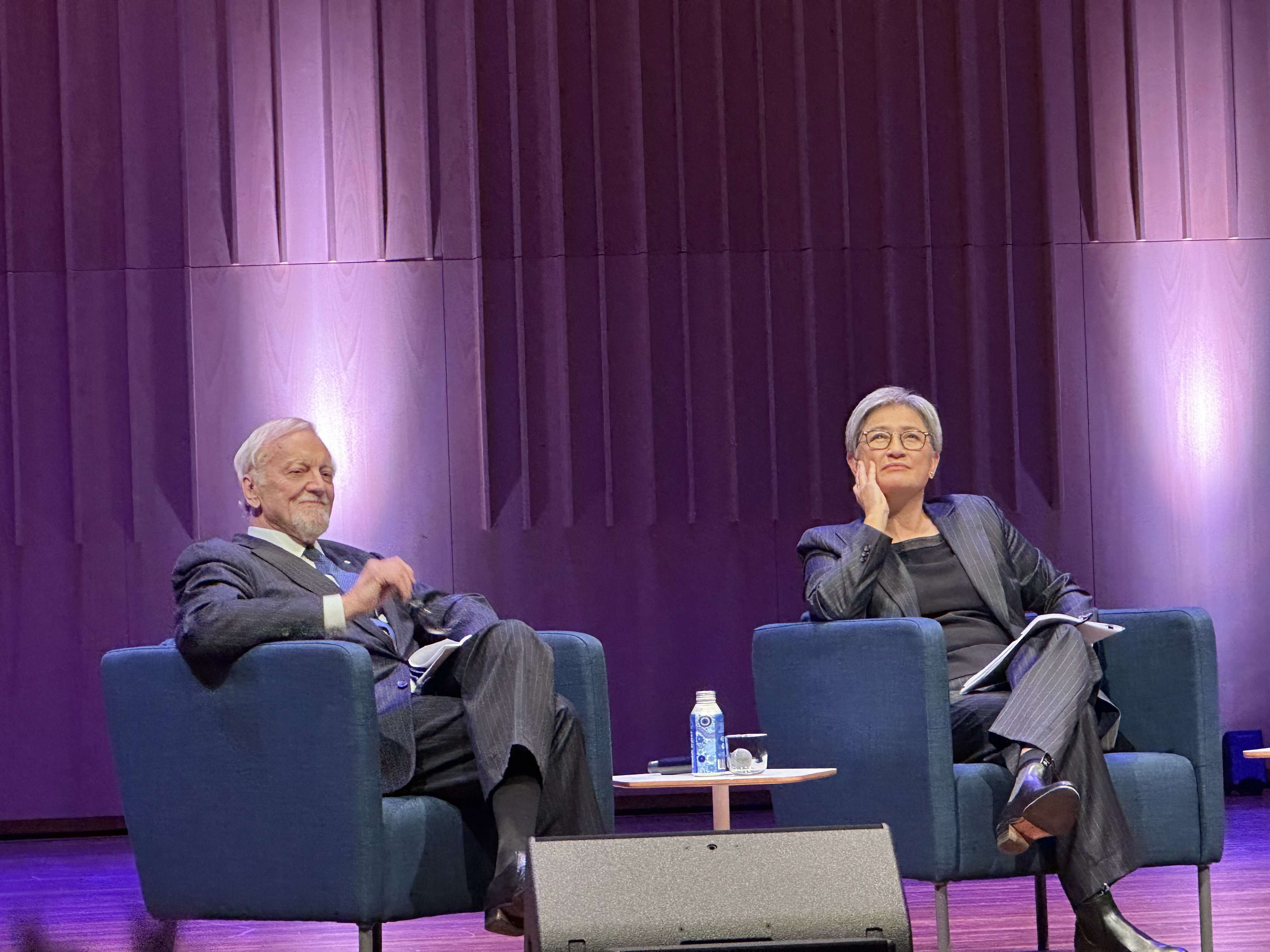
To get into politics at a time where there were hardly any First Nations, Asian or other cultural background faces is always a daunting and an intimidating experience, for those who are not white or part of a racial majority. This was the feeling Australia’s Foreign Minister The Hon. Penny Wong felt as she first graced the halls of Parliament House with her presence as a South Australian Senator back in 2002.
In an inaugural speech delivered at the Australian National University (ANU) for the Centre for Asian-Australian Leadership (CAAL) earlier this week, Wong spoke about this experience and how the only “coloured” faces were those who were working as Parliament clerks and/or cleaners.

“I am not someone who is easily intimidated, but it certainly felt daunting knowing I was one of the first to be in this position, because what is implicit in being a or one of the “firsts” is being the only. And for a time, this was the case for me. I felt like the only faces I would see in Parliament House were the cleaners and the woman who worked in the library”, Wong expressed.
“I remember sharing a look or an eye wink with them because we looked the same and we were so few and far between. I think all of you know that feeling where you encounter those who are different from the majority and you share an unspoken knowing and acknowledgement. I suppose it was natural for me to wonder at times if I had made the right choice, but that question was always answered by my conviction that we need to have genuine diversity in our institutions”.
Wong never intended to remain as one of the “first” – and where this was the case for many years of her career, during the 2022 Federal Election thing started to change where Australia elected four other Asian Australians into the House of Representatives for the Labor Party and including Wong now two Senators, the Liberal Party re-electing one, one Independent being elected and the Greens having one in the Senate. This is in addition to others being elected from a First Nations background and other BIPOC backgrounds.
This was a total change for Wong where she now became part of Australia’s most culturally and religiously diverse Government and Parliament in the country’s history.
“I think we do see more cultural representation across business, institutions and communities – we have definitely come a long way – but there is still a long way to go. I now have the privilege of serving in the most diverse Parliament in our country’s history, as well as serving in the most diverse Government in our country’s history. If you listen to all the maiden speeches by these MPs and Senator, you can feel the emotion and how these moments to hear their voices was a long time coming”.

In the area of policy talk, Wong did talk extensively about changes to the Government’s Columbo plan, which will have an impact on learning other languages other than English. Languages such as Indonesian, Chinese etc will be a focus and this is important considering Australia is located in Asia and will continue to have significant engagements as the region grows economically.
“Building on the work of previous Labor Governments, the new Columbo plan has helped thousands of students undertake study and language training and be able to do internships in our region. It is time we reflect on what else this program can bring, and we want participants to not only bring back long lasting memories, but also bring back skills and capabilities in order to broaden our understanding of the region”, Wong stated.
“We want more students to spend more time in the region, learn culture, languages and we want to ensure even short term programs will deliver benefits for students”.
Wong discussed three new reforms which would change the new Columbo plan and strategically help Australia and the Government to achieve regional objectives. The first would be to remove caps and double the number of long term scholarships available to universities and introduce a stronger focus on language learning.
Secondly, the Government will create new language streams to provide an avenue for students to deepen their understanding of language through short courses and long term immersive courses. And thirdly, the Government will retain short term mobility grants for students and ensure better processes for universities to use these grants to create better links with other universities in our region.
From this, it sounds promising, but the question remains whether this will help Australia rid its prejudices against Asia and Asians and whether this will help enhance understanding and more engagements. In any case, it is probably a wait and see situation as Australia still struggles with its relationship with Mainland China and how it still kowtows to the United States.


Leave a Reply